The Collector
Overview
An exploration-focused level made in Unreal Engine 5, where the player is tasked with infiltrating a government facility located in the Bermuda Triangle, gathering intelligence, and destroying it from within.
Play it on itch
Design Goals
-
Improve my skills in architecture and layout
-
Big focus on exploration and storytelling, with a strong sense of discovery and meaningful gating
-
Blend ideas from three games I deeply admire: Prey, Control, and Abiotic Factor
Constraints
-
Made for the Level Design Jam 12 hosted by Steve Lee
-
Theme: Machines
-
Deliver a first playable version within 3 weeks, then continue iterating on it
My Process
Text-first
I opened a simple notepad file and divided it roughly like this:
Constraints
I wrote down external constraints from the jam and internal constraints I set for myself.
Ideas
Any idea I get at any time goes here.
Sequence Blocks
I divided each main section of the facility into separate sequences so I could refine the flow of each area more easily


A couple examples of my text document at the end of development
Flowchart and Sketch
Flowchart
For this project, a flowchart proved invaluable for setting up the gating structure. My main goal was to expose the player to the primary objective from the very beginning, then encourage them to explore the facility.
I started building the flowchart around the Lobby, as it serves as the central hub that the player revisits multiple times throughout the experience.

I wanted the flowchart to be as minimal as possible with only the essential information regarding the main gates displayed
Layout Sketch
After the flowchart was complete, I moved on to the sketching phase, which was done alongside reference gathering. I primarily use sketches to explore the overall shapes and connections between areas.
The process involved a constant back-and-forth between drawing and researching references, to really understand how the progression gates could be naturally integrated into the architecture before moving into 3D.
The rough sketch I ended up with

References
References helped me stay grounded in the setting and give each space a clear sense of purpose. I primarily gathered real-world references from existing buildings, with heavy inspiration taken from brutalist architecture. For the overall atmosphere and the exterior, I also looked at abstract concept art and sci-fi structures to spark my imagination.

Blockout
When I block out my levels in Unreal, I love using the Scythe plugin, which closely mimics Source 2's level design workflow by functioning more like a modeling tool.
This allowed me to establish a distinct architectural identity from the start and significantly simplified future iterations.
Editor

Gym level where I tested metrics
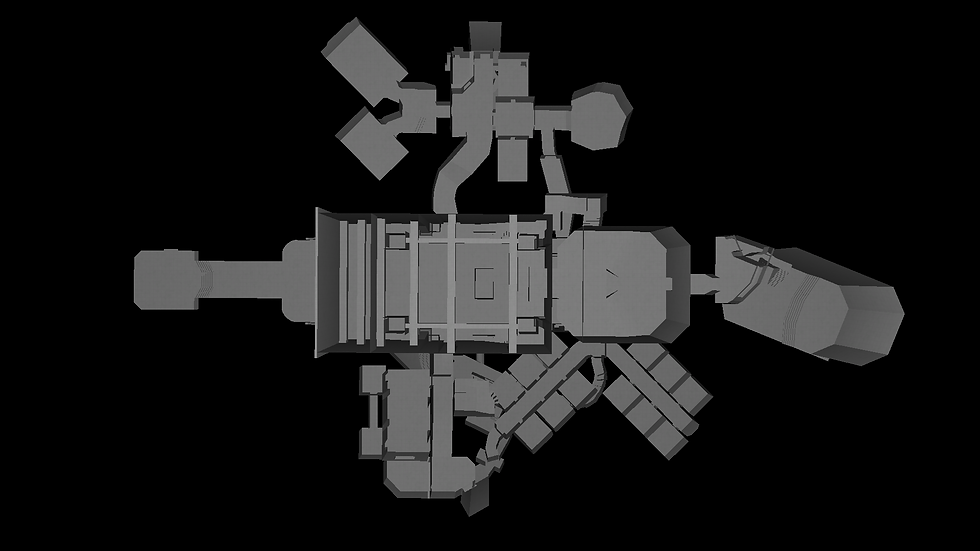


Some screenshots of the first pass of the level's geo
Scripting
I used an LD kit developed by Paris Stacy (Valve), which provided a solid first-person controller and a set of gameplay ingredients, including doors, buttons, batteries, damage volumes, breakable surfaces and more.
Once the layout was established, I moved on to scripting. All level logic is contained within the Level Blueprint. I organized the scripts by area and color-coded them to make future revisions easier to manage. Scripts primarily handled progression gates, doors, buttons, player objectives, and several dynamic events.

Narrative
For this project, I waited until the first gameplay pass was established before fully developing a story. Since exploration, progression, shortcuts and non-linearity were the core goals of the project, I wanted to solve those aspects first and avoid constraining them around a pre-existing narrative.
Once the blockout was in place, the plan was to use the spaces that had naturally emerged from the layout as opportunities for storytelling. So I came up with a simple story that had an interesting twist at the end, documented every readable on a Miro board, and started populating the spaces with some environmental storytelling.

Playtesting & Iterations
Iteration is at the core of my process, so I try to reach it as early as possible.
For this project, I had around 20 playtesters. Some tested every iteration, while others were new to each version.
Below, I break down each area following the intended critical path with a video of the final version and an explanation of every iteration.
Exterior
The level starts with the big reveal of the facility in the distance. It is gradually revealed behind a rock formation, and the sound effect, combined with the large on-screen text grounds the entire moment and establishes the goal for this section in the distance.
I intentionally made the boat approach quite long to let the player fully experience the moment and absorb the atmosphere. This calm is then broken by an elevator collapse, which forces the player to complete the remaining section through some platforming.


Lobby
The lobby reveal is also an important moment. The entrance is funneled before opening up into a more majestic space.
The shape of the room and the tree inside act as a weenie; since the lobby is the level’s central hub, when the player loops back to it, the tree makes the space easier to recognize and remember.
Here the player starts to question where everyone is, and can pick up their first badge. They cannot use any of the side doors due to the Collector being in emergency status.


Command Center
Before entering the Command Center, the player reads a panel about the two facility administrators.
This is intentionally placed throughout the level to constantly remind the player of these characters, who play an important role in both story and gameplay.


Collector
Inside the Collector the main objective is introduced: activate the self-destruction sequence. To do this, the player must find two admin keys and redirect power to the Collector from the Power Plant.
The emergency status is also lifted here, allowing free exploration of previously locked rooms.


Residences
This area is the most narrative-heavy section of the level, featuring numerous readable notes. I took heavy inspiration from Prey for the dormitories.
The intent was for it to act as a secondary hub, as players who find personnel badges around the facility can/must return here later to unlock the corresponding rooms.


Power Plant
Power Plant is the most platforming-heavy section. The idea was to have the player reactivate the turbine from below, exposing them once again to the exterior of the facility.
A major narrative reveal also happens here, as the player encounters pools of blood for the first time and begins to piece together that the system failure might not be the only thing that occurred.
The player also completes one of the three steps for main goal here (redirecting the power) and finds two badges that allow further progression when backtracking to the dormitories.


Security
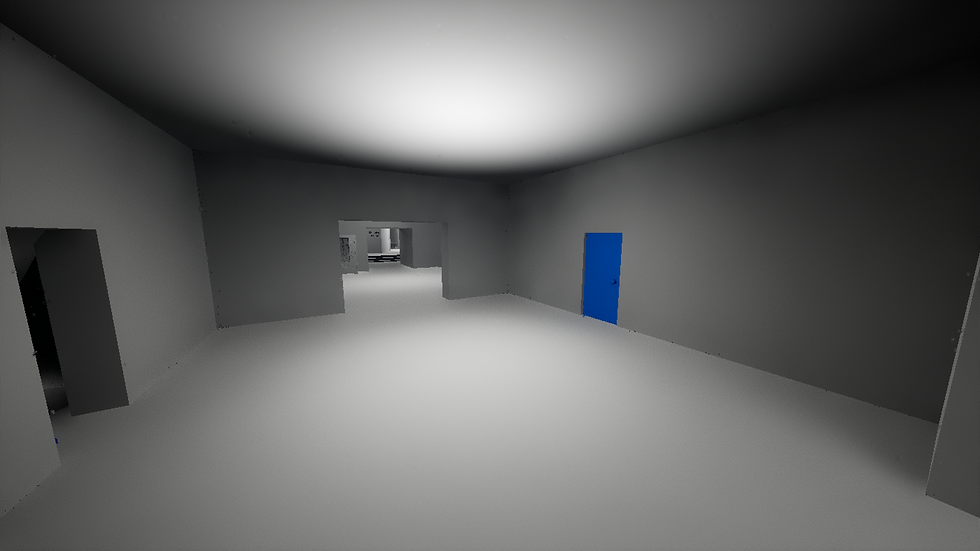
Security is heavily exploration-focused, featuring various optional side rooms.
Because of this, I avoided placing major narrative readables here. The player finds one of the two admin keys here and can also lift the lockdown in Weather Research.


Weather Research
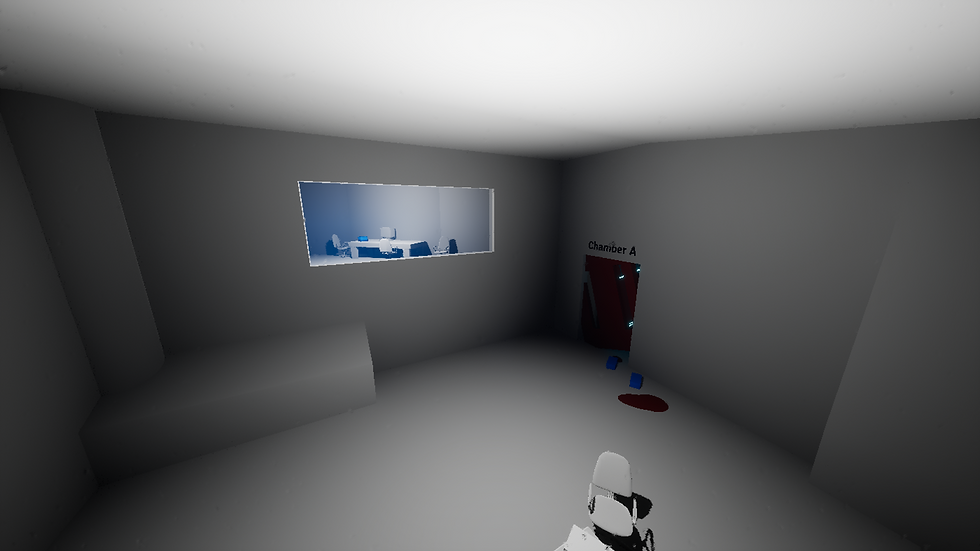
This sector starts the final narrative beat of the level. The player acquires the Electro-Suit here, which opens several optional side rooms that were previously inaccessible and allows access to the Collector's inner chamber where the player will need to insert the two admin keys.
They also find their final badge, and after opening its corresponding dorm room, they obtain the last admin key and the final narrative reveal with the twist.

Finale
The player returns to the Collector, inserts the keys, pulls the auto-destruction lever, and escapes through the lobby as alarms go off and red lights flash, serving as the level’s climax.
Once on the outside platform, they automatically extract, ending the level.
Closing Thoughts
This project was an absolute joy to work on. I'm very satisfied with what I accomplished and see it as my own take on blending Prey, Control, and Abiotic Factor.
The level was well received by playtesters, who often highlighted its mood and atmosphere as the most memorable aspects. They also enjoyed the exploration, which was one of my primary goals from the beginning.
Working with a limited set of tools also helped me improve an area that I felt was one of my weaknesses before starting this project: building compelling geometry and layouts. I learned a great deal about creating interesting architecture for level design and about layout work in general.
There are still some rough edges here and there of course. I think certain areas could benefit from more interactivity, and the amount of information the player has to process can become overwhelming for less experienced players. Despite that, I consider the project a success and a valuable learning experience.